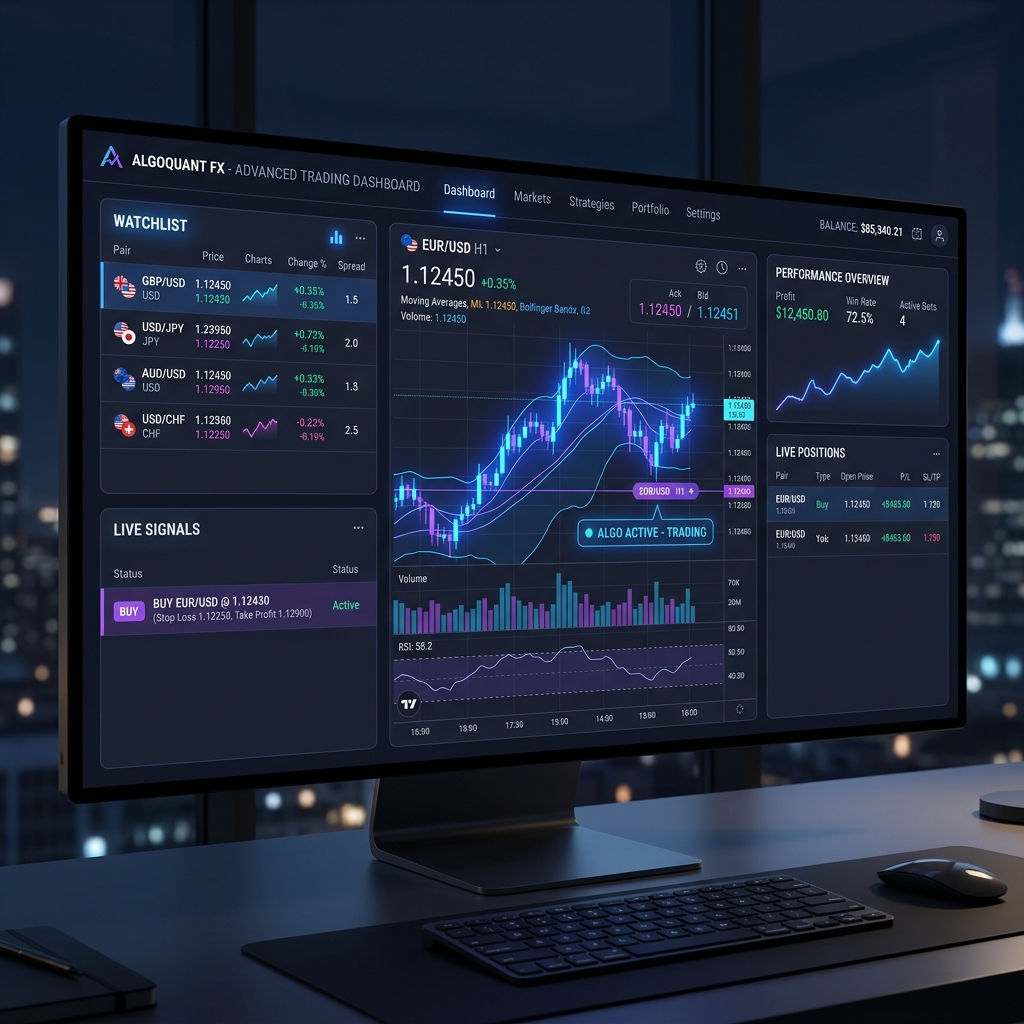
If you've spent real time in forex trading, you've probably heard someone throw "VPS hosting" around like it's a magic bullet. They're not entirely wrong. But the hand-wavy explanations people give are mostly useless, so here's what's actually happening.
A VPS — Virtual Private Server — is a rented slice of a physical machine sitting in a data center somewhere. It gives you your own computing environment where trading software runs continuously, whether your laptop is open or not. Simple enough.
But the reason serious traders and brokers actually care about VPS isn't just uptime. It's something far more specific, tied to one of the most unforgiving realities in financial markets: time doesn't wait for your connection to catch up.
Latency is everything. No, really.
Here's what most people don't absorb until they've bled money because of it. Forex moves in milliseconds. The EUR/USD spread can widen and snap back before a human brain even registers the number changed.
When you're running an automated strategy — an Expert Advisor on MT4, a custom algorithm, whatever — every millisecond between when your system fires an order and when the broker's server catches and executes it is potential slippage. Potential losses. Potential catastrophe, if your edge is razor-thin enough that execution friction destroys it entirely.
This is where co-location enters. Co-location means physically placing your server in the same building — sometimes the same rack — as your broker's trading server, or as geographically close as the laws of physics allow. The signal travels a shorter distance. Latency drops. Sometimes dramatically.
Actual numbers: a New York server connecting to a broker whose matching engine lives in London sees roughly 75–80ms under normal conditions. A co-located server in that same London data center? Maybe 1–5ms. That's a different category of performance entirely.
Why Brokers Specifically Should Care About This
So far, the trader's perspective. But brokers — retail forex firms taking the other side of your trades or routing them to liquidity providers — face their own co-location calculus, and it's messier.
Think about the last time you got a fill that was two or three pips off from where you clicked. Sometimes it's just what happens when a broker's core infrastructure is talking to multiple places at once — simultaneously pulling price feeds from liquidity providers, running a pricing engine, and routing orders while managing risk exposure for potentially thousands of clients.
If that infrastructure sits on a general-purpose cloud server in some random AWS region, delays compound at every step. The price feed arrives stale. The broker's engine works with outdated data. Orders are filled at prices that no longer exist.
So serious brokers plant themselves in financial data centers where things actually happen. LD4 in London. NY4 and NY5 in New Jersey. TY3 in Tokyo. These aren't ordinary data centers. They're purpose-built for low-latency financial connectivity, and the rent reflects exactly how much that's worth.
The "Virtual" Part of VPS is Doing a Lot of Work
Let me clear something up. VPS and dedicated co-located servers aren't identical, though people constantly conflate them.
A dedicated server is physical hardware you rent exclusively. All the CPU, RAM, and network throughput of that machine belongs to you. For a major broker moving millions of trades monthly, that's probably the setup.
A VPS is virtualized — one physical machine partitioned into multiple isolated environments, potentially shared with dozens of other customers. For individual traders running automated strategies, a forex VPS from specialized providers is more than sufficient.
Here's what actually matters, though: a good forex VPS provider isn't really selling computing resources. They're selling location. Their servers already reside in LD4 or NY4, whichever location your broker's infrastructure is anchored in. The VPS is just the delivery wrapper.
Slippage and Why This Isn't Just for HFT Nerds
There's this assumption that latency only matters for high-frequency trading (HFT). But the idea that latency is irrelevant to regular traders is just wrong.
Slippage happens for several reasons. Execution delay is one of the big ones — your order arrives after the market has already moved. For scalpers, this is obvious and painful. For swing traders executing larger positions, even 2–3 pips of average slippage, compounded across hundreds of trades, meaningfully grinds down returns.
Picture this: someone runs a forex EA for eight months on a home computer — solid backtesting results, mediocre live performance. They move to a co-located VPS. Execution time drops from around 200ms to under 10ms, and live results start matching backtests far more closely. Not surprising. The slippage was quietly eating the edge the whole time.
The Broker's Infrastructure Stack
If you're thinking about launching a retail forex operation, here's a rough sketch of what you'd actually be building:
- Your pricing engine needs to sit as close to your LP servers as physically possible.
- Your trading server is what client platforms connect to.
- Your risk management system, CRM, and reporting layer on top.
Execution-critical components need co-location and connectivity to liquidity via cross-connects or dark fiber rather than the public internet. Equinix charges somewhere in the $1,500–$5,000+ range per month for a single LD4 cabinet, which is why many smaller brokers adopt a white-label infrastructure model.
The Reliability Angle
Latency gets most of the attention. But there's another reason professional co-located hosting matters, and it has nothing to do with speed.
A trading server that goes dark at 2 am GMT on a Sunday — when Asian markets are opening, and liquidity is thin — is a catastrophe. Professional financial data centers run redundant power: multiple grid feeds, diesel generators, UPS systems. Redundant cooling. Multiple network connections from different carriers.
The uptime guarantees they advertise — 99.999%, "five nines" — translate to fewer than six minutes of downtime per year.
In a market where prices move in milliseconds, geography is a competitive advantage. That's not changing.